

Material culture chosen for its form, history, and human hand.
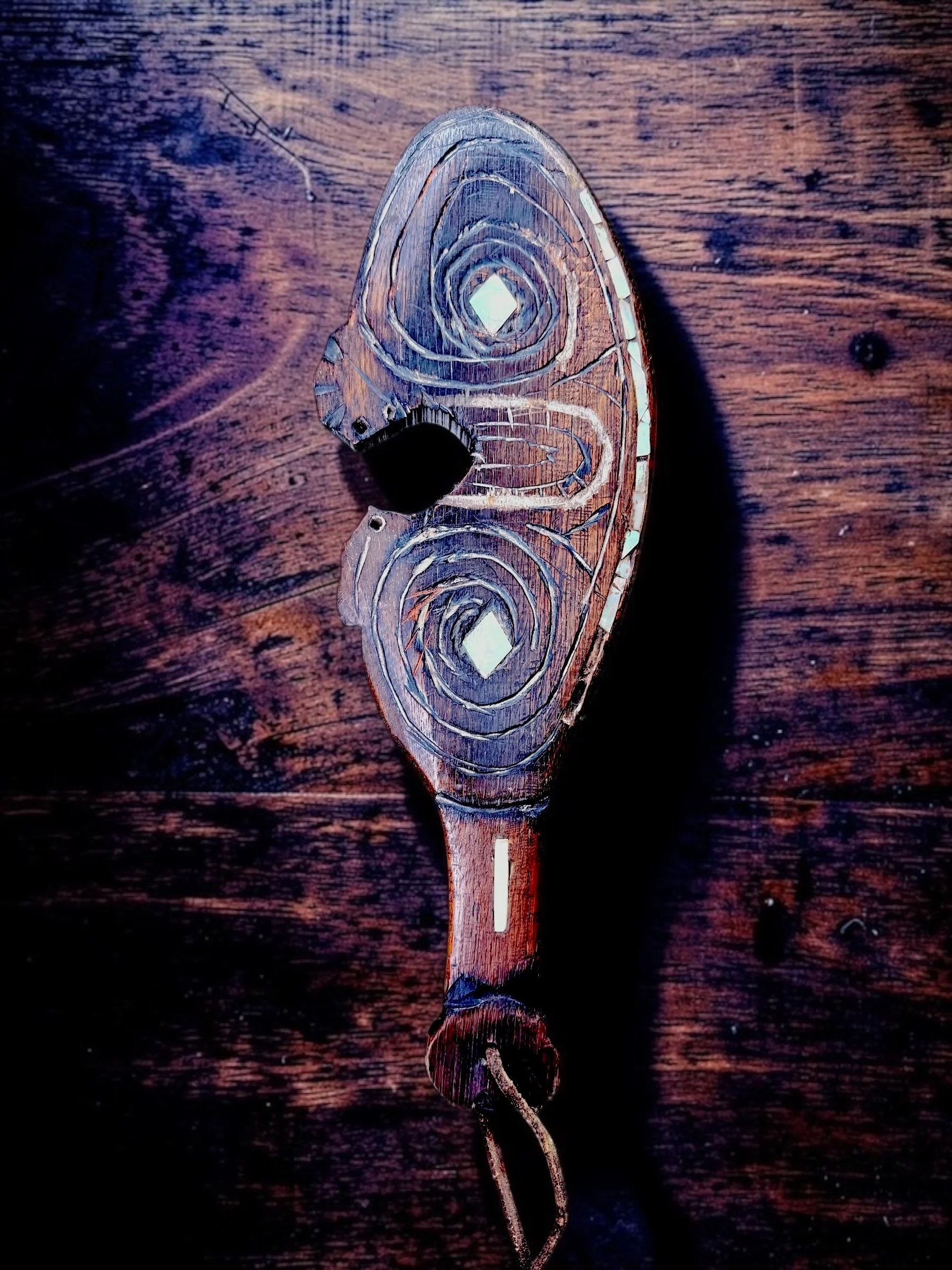
Circa 1880–1930 Māori Carved Wood Wahaika with Pāua Shell Inlay Traditional short-club weapon form, deeply carved double-sided spiral decoration, pāua shell inlay, leather wrist thong, one missing shell inlay, old central loss and repair, age-related surface wear, combat use unproven 17 in. long,
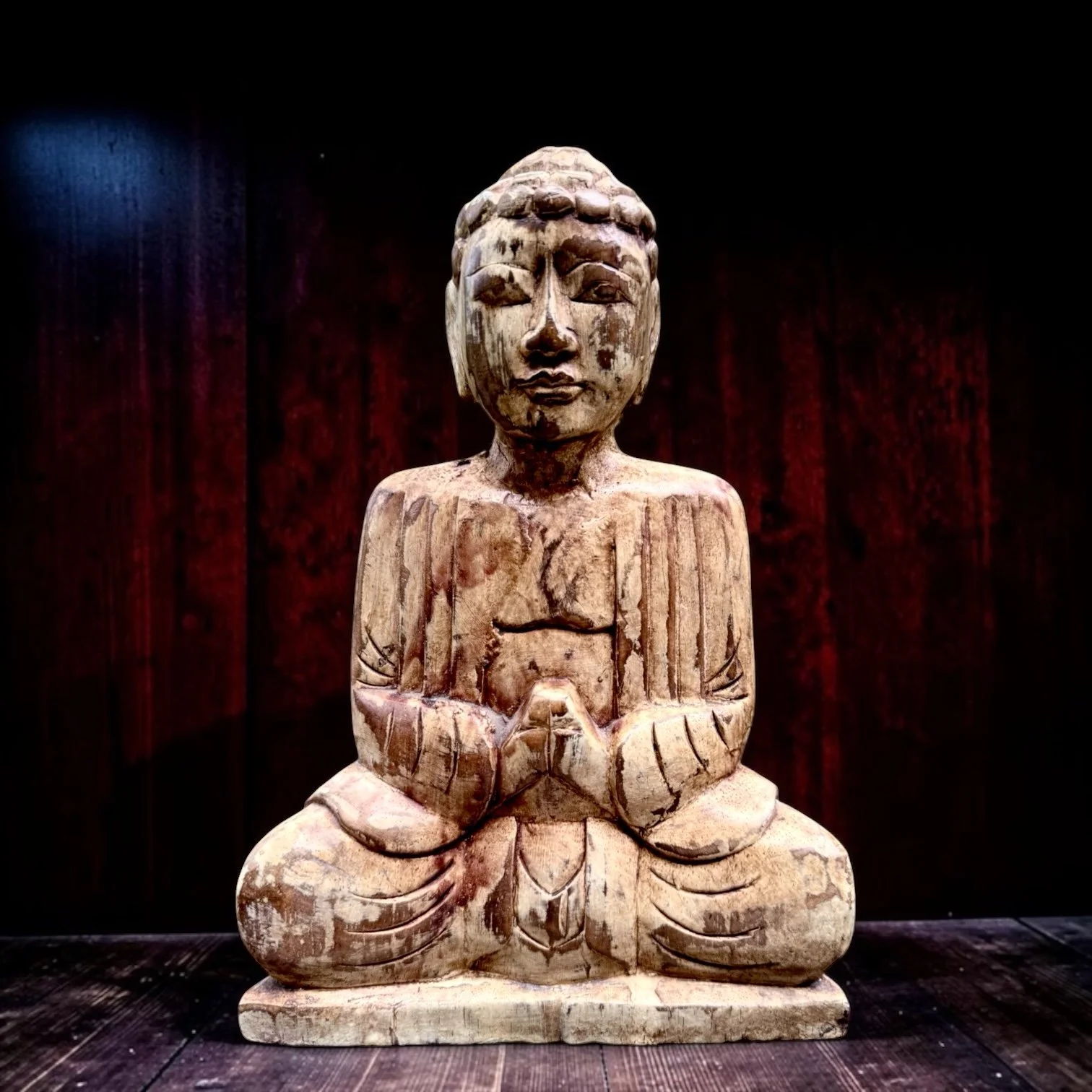
Antique Southeast Asian Carved Wood Buddha Architectural Fragment Southeast Asian, circa 1900, hand-carved wood, seated Buddha with weathered painted surface, architectural salvage with three original mounting holes underneath, 9.5" H × 6.5" W × 2.5" D, 271.8 g Antique architectural condition with extensive surface wear, finish loss, abrasions, small chips, natural wood checking and softened carved details. Three old mounting holes with residual fiber are visible underneath. Stable and structurally sound, with no obvious modern repairs.
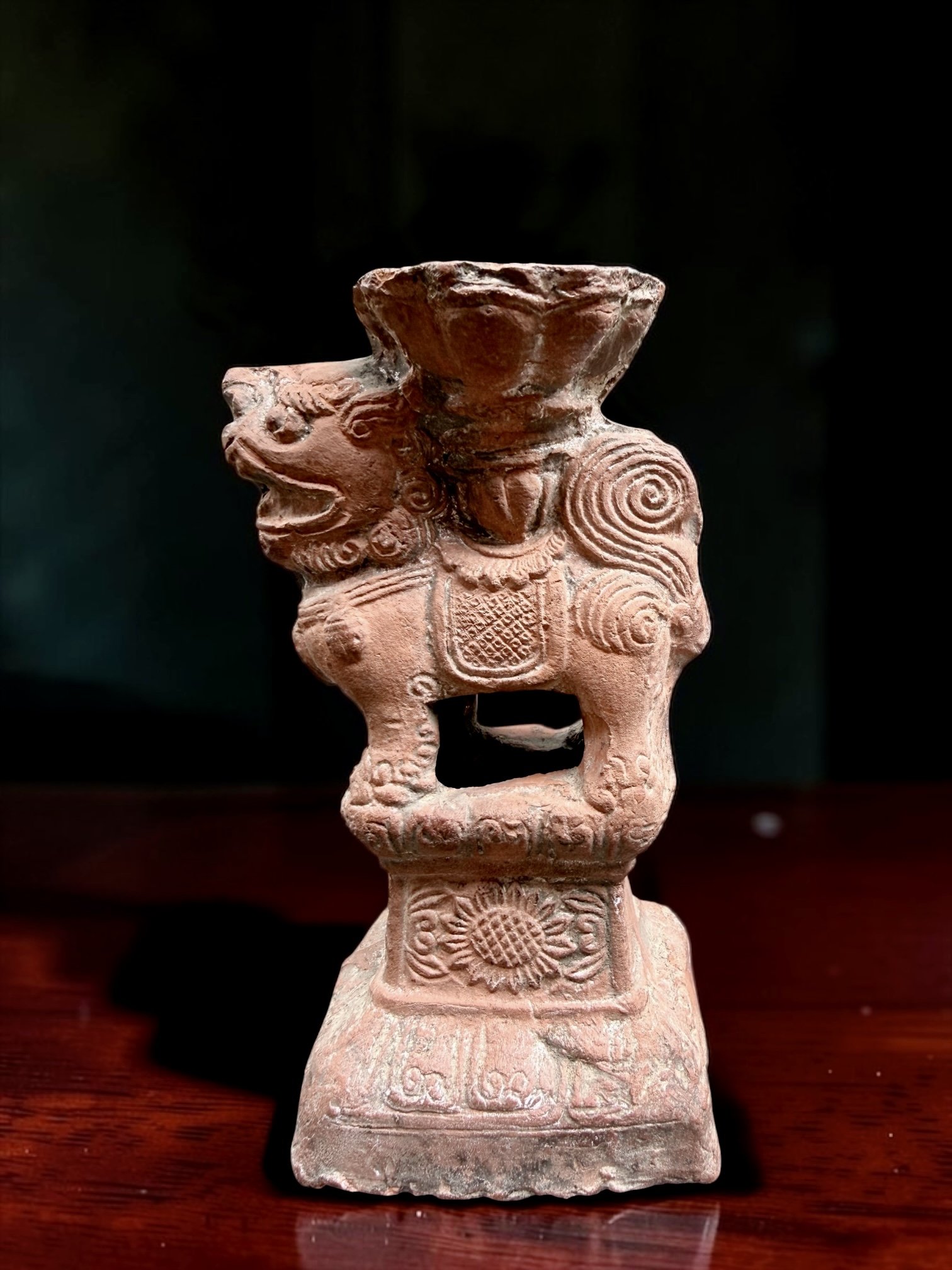
Early - Mid 20th Century Chinese Terracotta Guardian Lion Incense Burner China, Molded and hand-finished raw terracotta, stylized guardian lion supporting a lotus-form burning bowl, hollow vented construction, incised saddle cloth, floral and cloud-scroll decoration, extensive ritual patina, 5.75" H × 3" W × 2.5" D, 308.3 g Antique condition with substantial soot, tar and residue from prolonged ritual use, particularly within the bowl and hollow interior. Surface wear, abrasions, firing fissures, softened details and scattered chips and losses are present throughout. No obvious repairs observed.
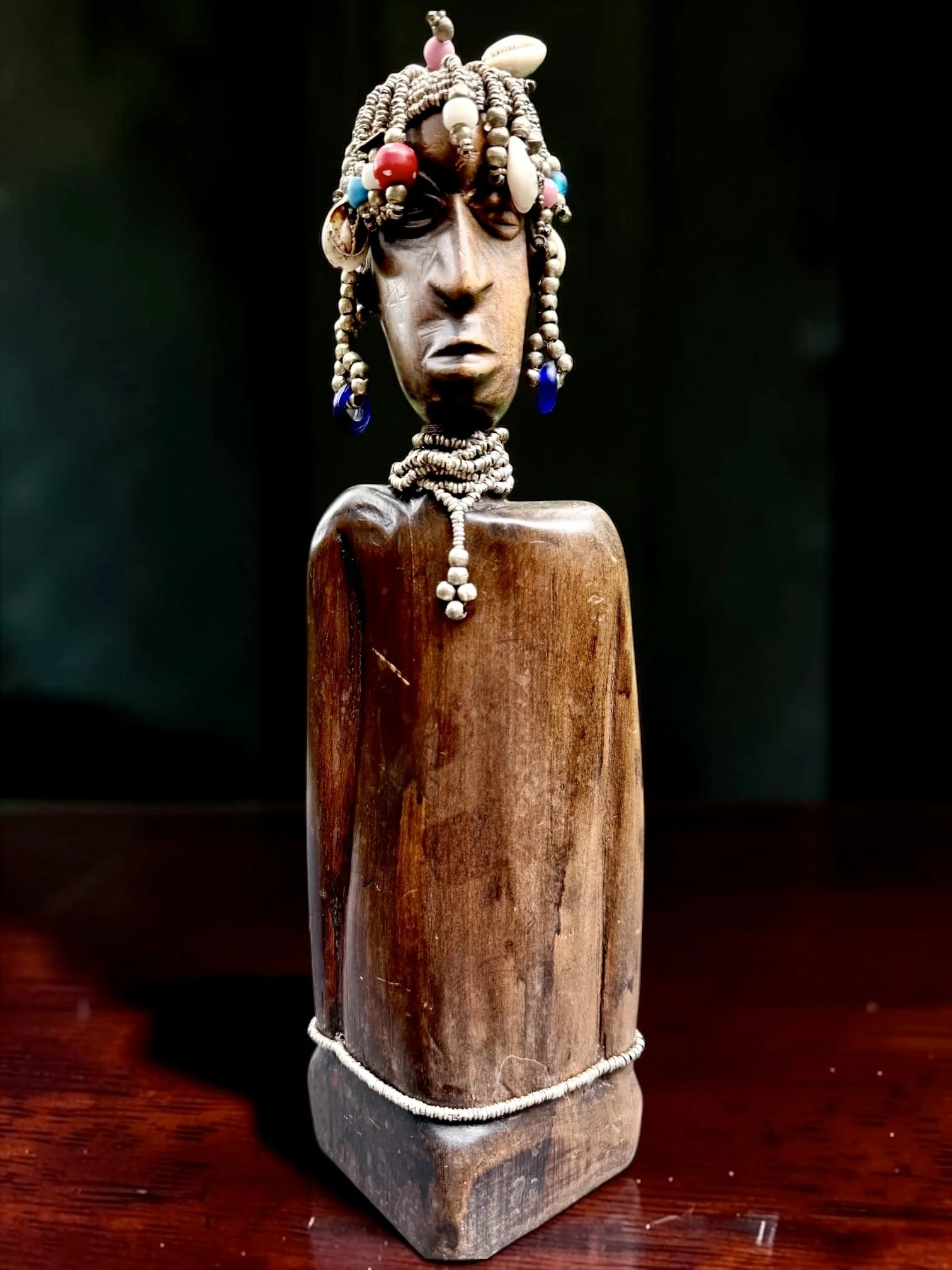
Vintage Cameroonian Namji Carved Wood Figure With Cowrie Shells and Metal Beads Attributed to the Namji people of Cameroon, circa 1980s–1990s, individually hand-carved from a single solid block of wood with visible tool marks and natural variations, then hand-adorned with cowrie shells, blue and multicolored glass beads, coiled silver-tone metal beads and bells, 13.5ʺ H × 3ʺ W × 3.25ʺ D, 917.9 g. Good vintage condition with surface scratches, small nicks and natural irregularities in the hand-carved wood. Metal elements show tarnish and oxidation; the fiber cords have wear and fraying, with possible minor bead loss or looseness.
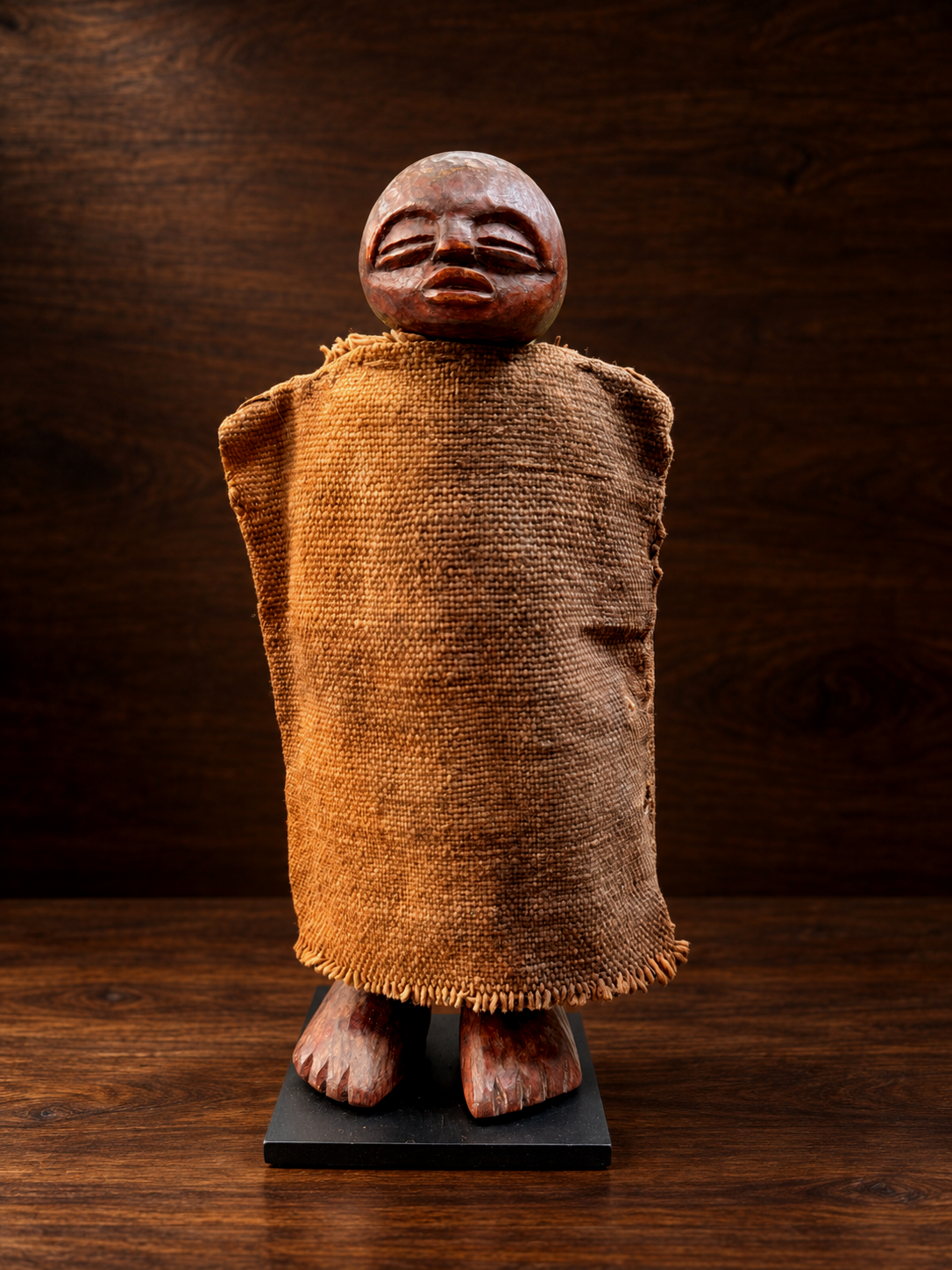
Early-to-Mid 20th-Century Palaw’an Tawtaw Hardwood Guardian Figure, Philippines Attributed to the Palaw’an people of Palawan, Philippines, early-to-mid 20th century, individually hand-carved dense hardwood household guardian figure with reddish-brown patina and dark surface accretions, as-found hand-sewn coarse-fiber garment, mounted on a later custom black metal base, 9.25ʺ H × 3ʺ W × 3ʺ D, 541 g including base. NOTE: Attribution inquiry submitted, not yet received Good antique condition with surface wear, abrasions, color variation, visible carving marks and stable age-related drying cracks. Dark accretions remain concentrated within the facial recesses, consistent with accumulated smoke, soot and handling. The projecting nose and lips are worn to lighter wood.
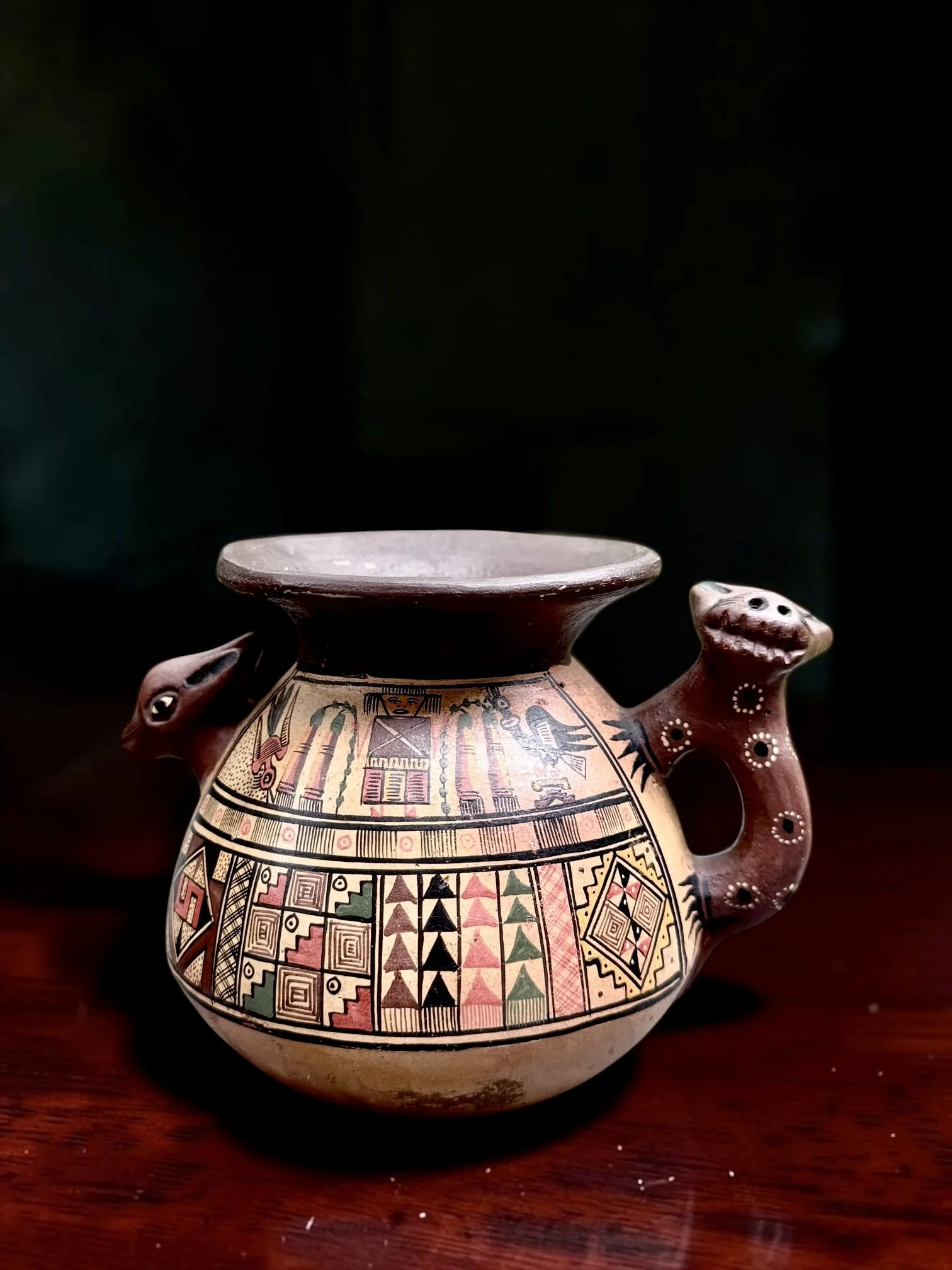
Signed Wily Cuno Surco Peruvian Folk Art Pottery Vessel With Animal Handles Peru, late 20th century, hand-painted earthenware, signed Wily Cuno Surco, approximately 4" H × 5.5" W including handles, approximately 4" body width, 1.5" opening, weight 359.5g Good vintage condition with no cracks or repairs observed. Visible paint loss and rubbing around the interior edge of the rim, with scattered surface wear and minor paint losses throughout.
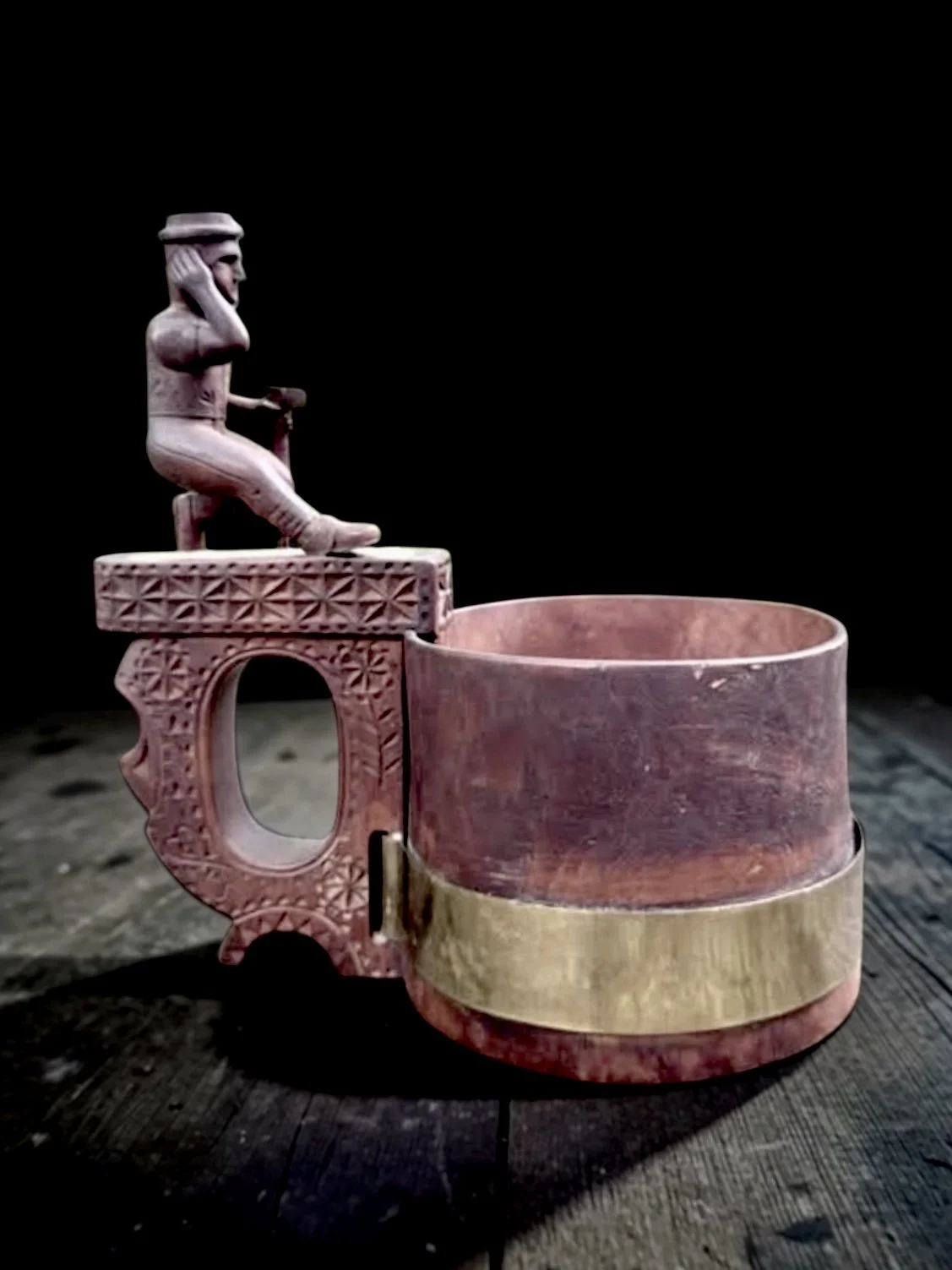
19th-century Slovak črpák — a shepherd's whey cup with anthropomorphic figural finial and original brass coopering band, Zólyom County type, museum-documented form.
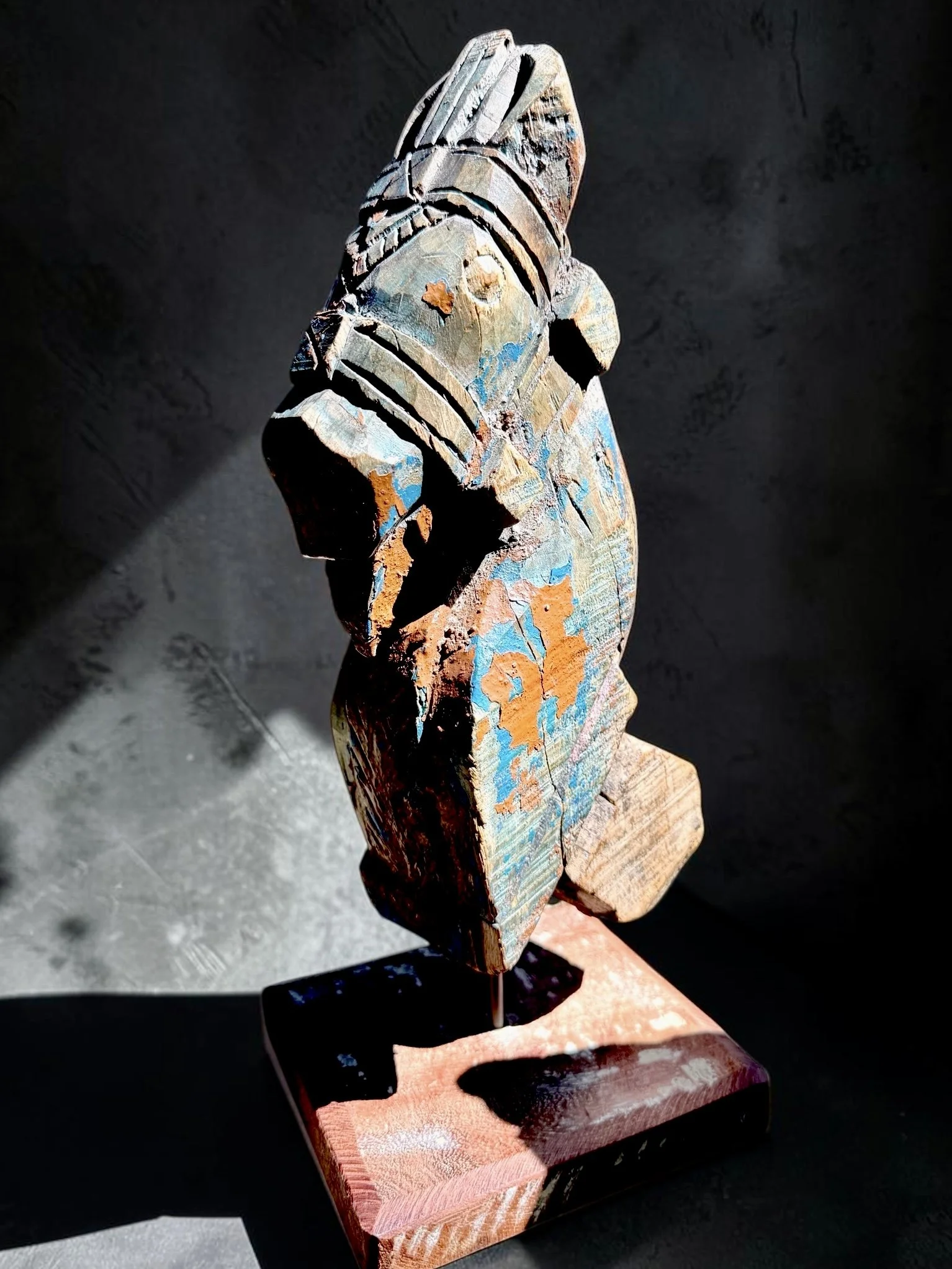
Carved Indian Architectural Salvage Horse, No. 1 of 3. Hand-carved and painted wood fragment mounted on a custom stand. Early 20th century, c. 1900–1930. Approx. 13" h × 5" w × 5" d. Age-related paint loss, wear, cracks and irregularities.
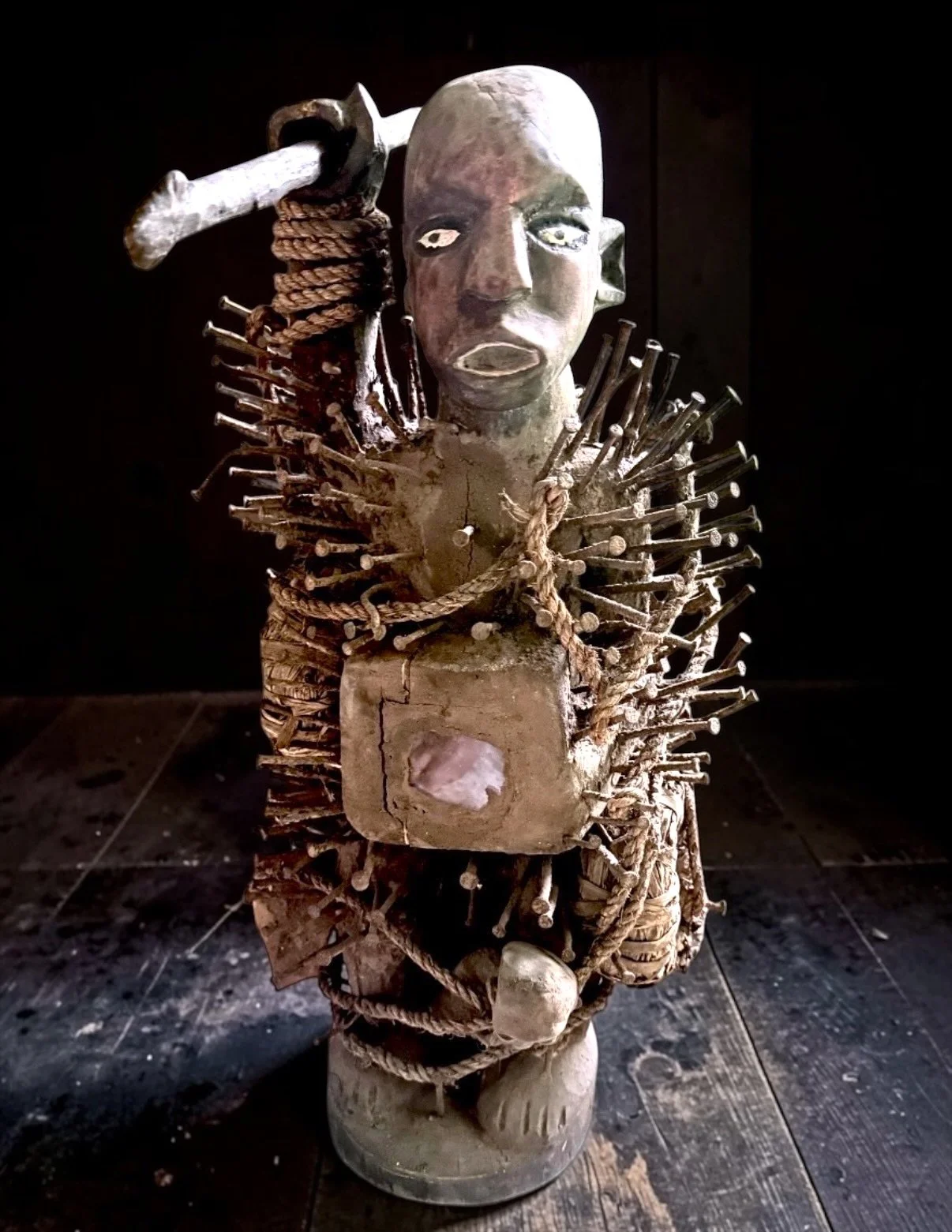
Statue in the style of Kongo Nkisi Power FIgure Congo, mid- late- 20th c. Wood, iron, fiber, clay, glass, ritual elements 26" h x 8" w
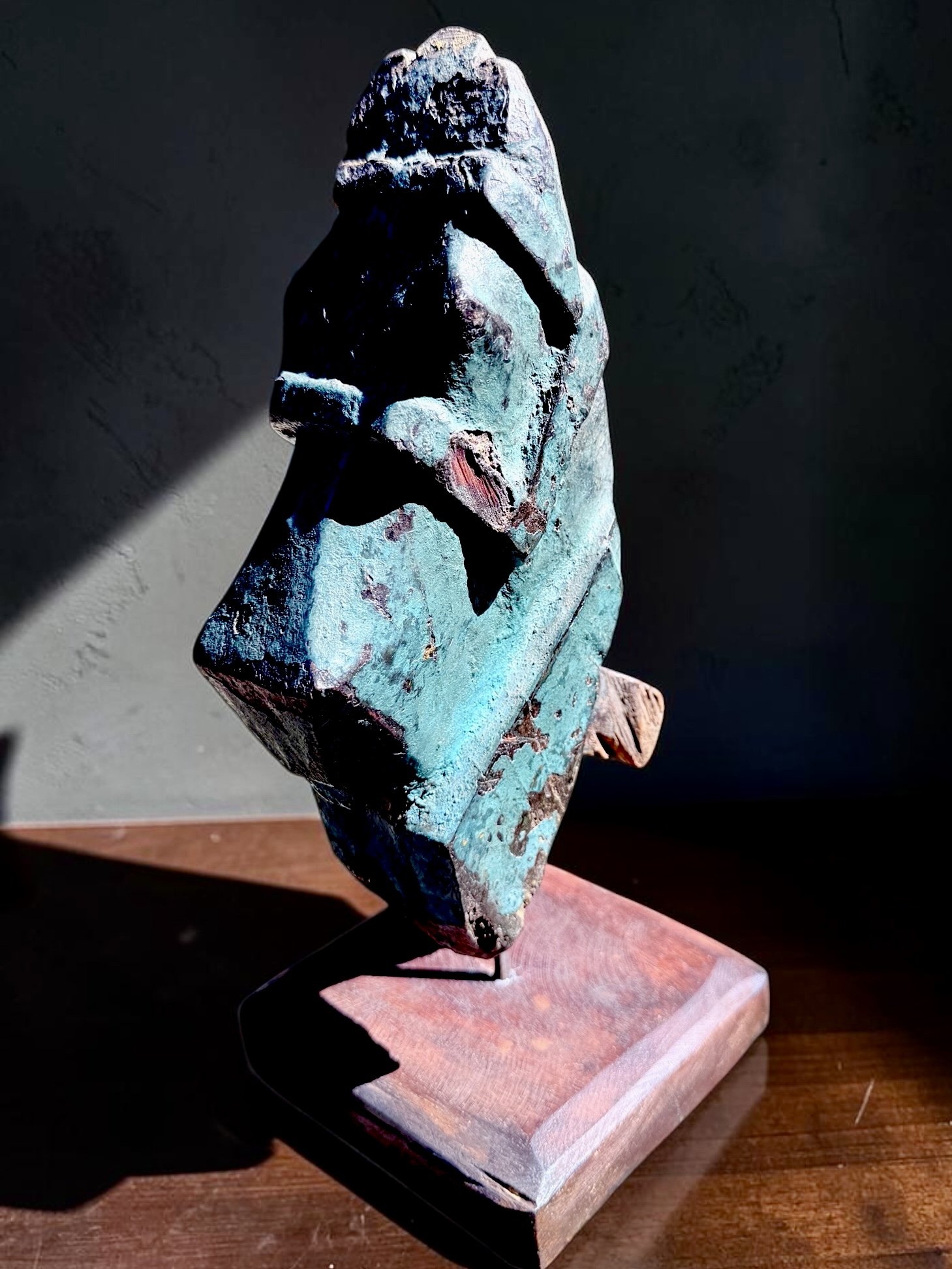
Carved Indian Architectural Salvage Horse, No. 3 of 3. Hand-carved and painted wood fragment mounted on a custom stand. Early 20th century, c. 1900–1930. Approx. 12" h × 5" w × 5" d. Age-related paint loss, wear, cracks and irregularities.
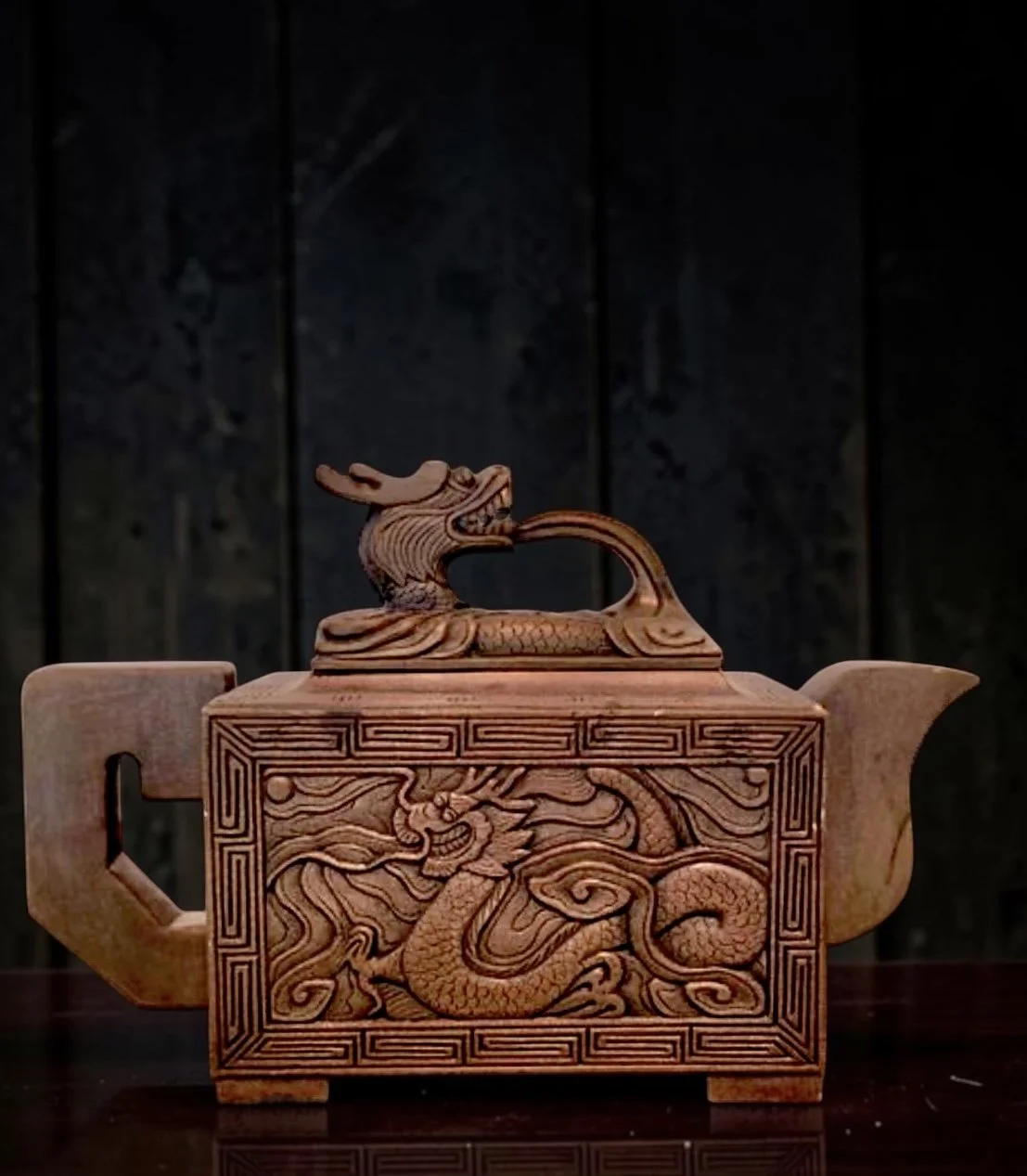
Vintage Yixing-style dragon teapot in the form of an archaic ritual vessel. Later 20th c. Rich sculptural presence with deeply carved dragon relief and warm matte clay surface. 6 3/4" x 4" Excellent condition
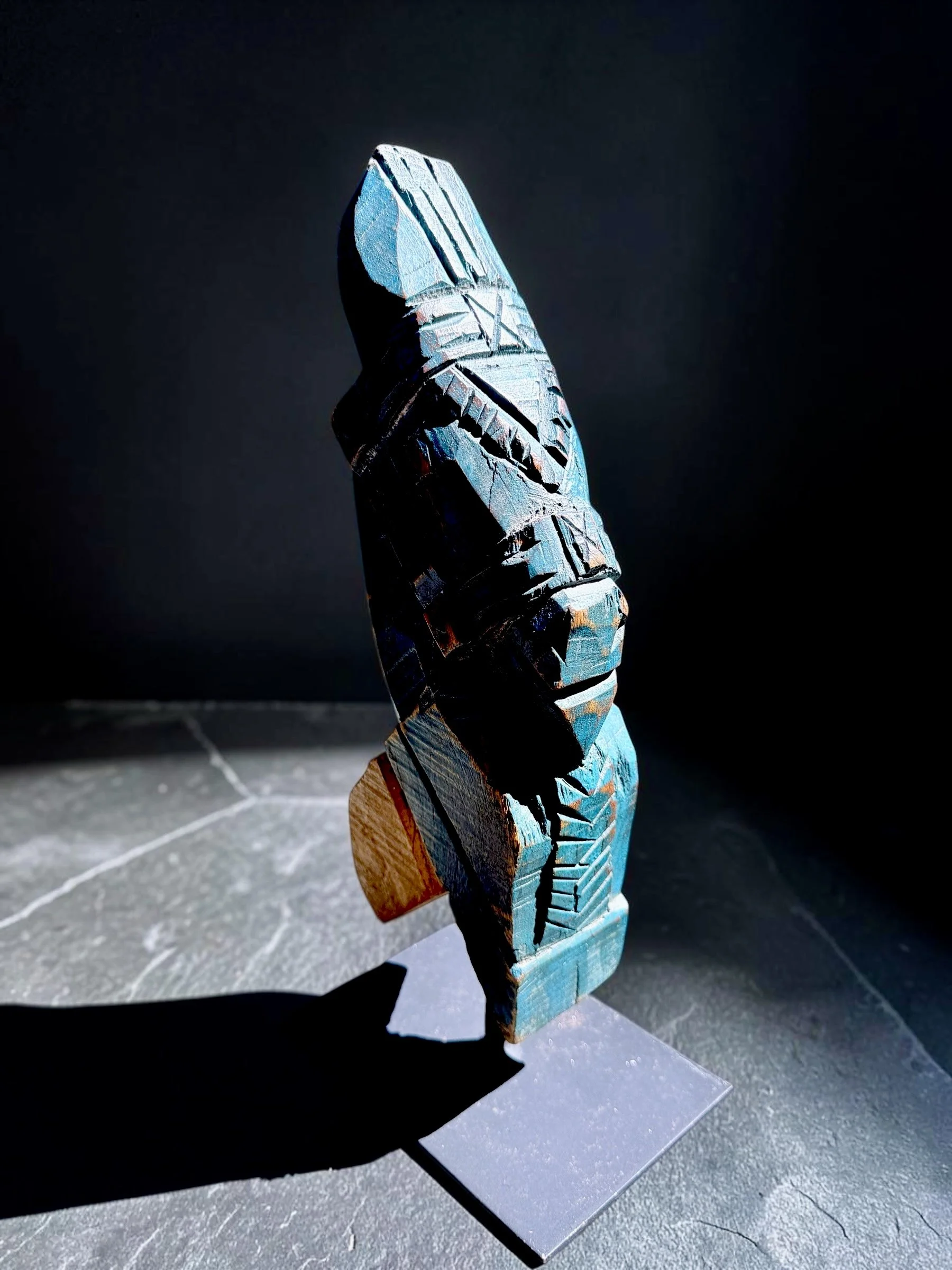
Carved Indian Architectural Salvage Horse, No. 2 of 3. Hand-carved and painted wood fragment mounted on a custom stand. Early 20th century, c. 1900–1930. Approx. 13" h × 5" w × 5" d. Age-related paint loss, wear, cracks and irregularities.
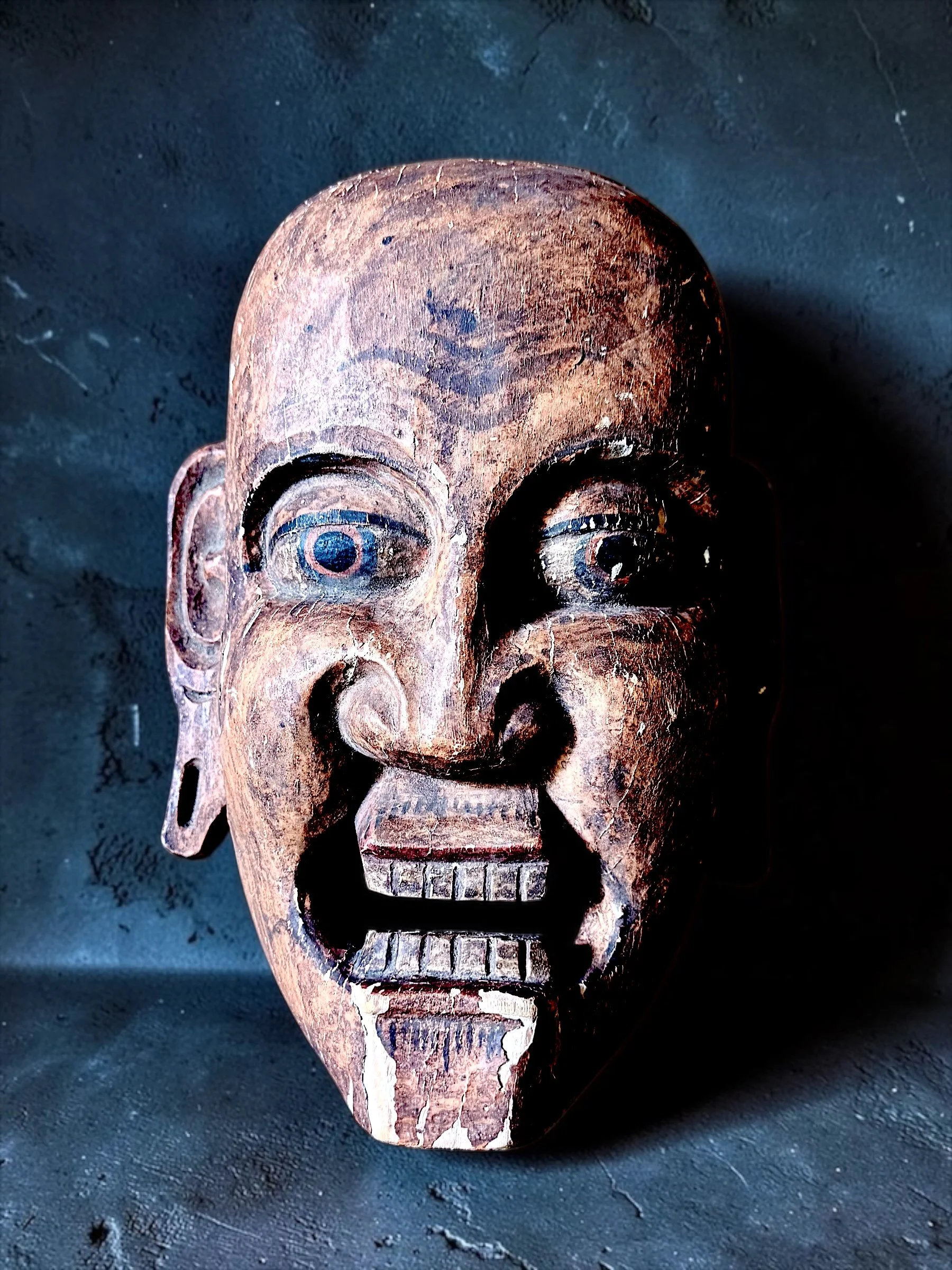
Vintage Himalayan Carved Wood Grotesque Festival Mask Deeply carved elongated face Wide staring eyes with painted pupils Heavy arched eyebrows Prominent sculptural nose Large projecting ears Gaping open mouth Oversized block-form upper and lower teeth Remnants of black, ochre, red and cream pigment Hand-adzed, deeply hollowed interior Strongly weathered folk-art surface Extensive surface wear, paint loss, abrasions and scattered chips throughout. Age cracks are visible at the upper and lower edges, with additional losses around the mouth and teeth. Evidence of old insect activity may be present. Structurally intact and especially evocative in its weathered state. Please review photographs closely. 9.25" x 6.75" x 3"
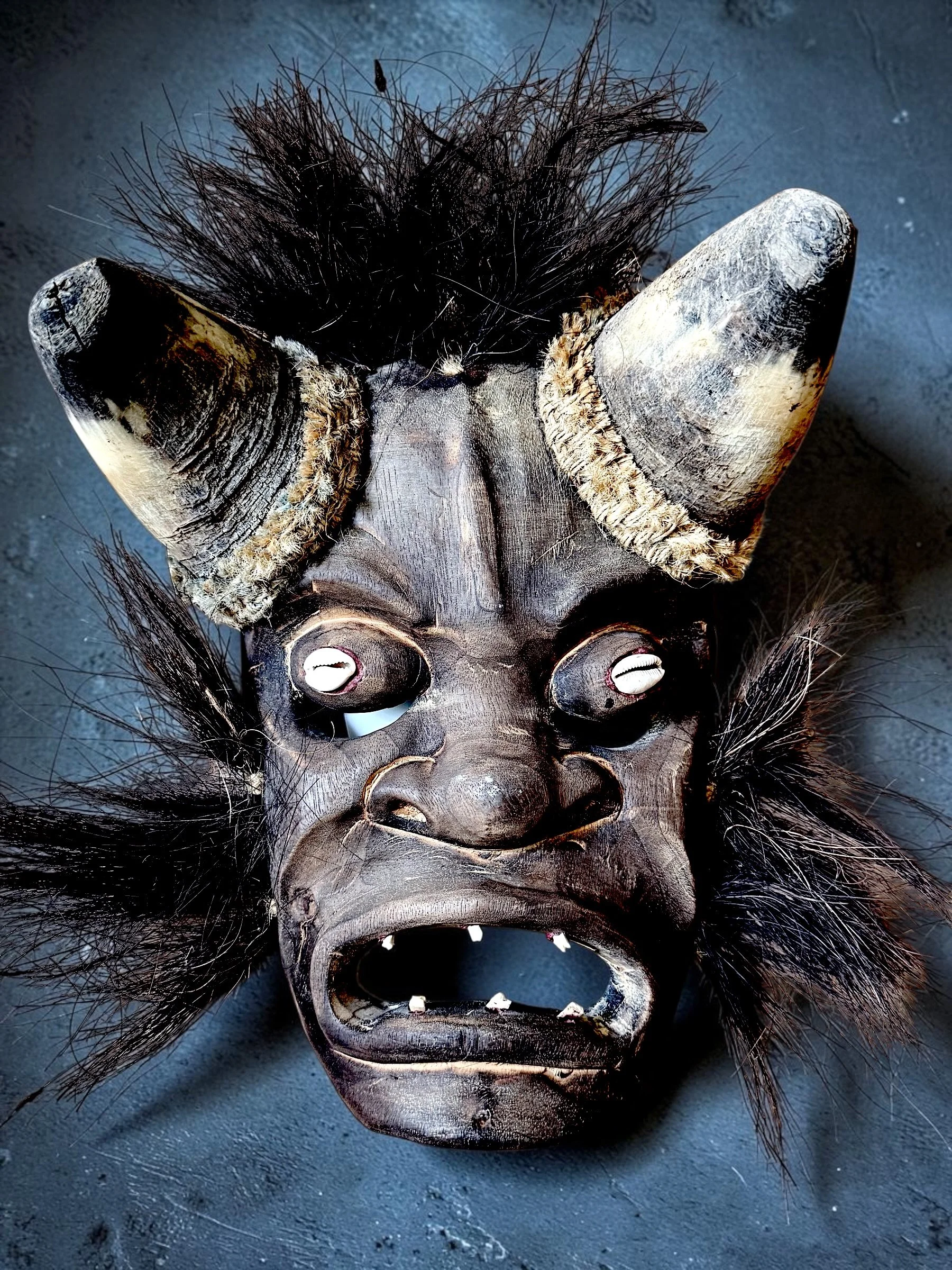
Vintage Wè/Guéré-Style Horned African Mask with Cowrie Shells, Hair and Teeth Vintage 20th-century African horned mask, hand-carved wood, natural horns, animal hair, cowrie-shell eyes, fiber-wrapped horn mounts, individually inserted teeth, dark timeworn surface, visible age-related wear and losses, possibly Wè/Guéré style, attribution unconfirmed 12" x 8.5" x 5" total
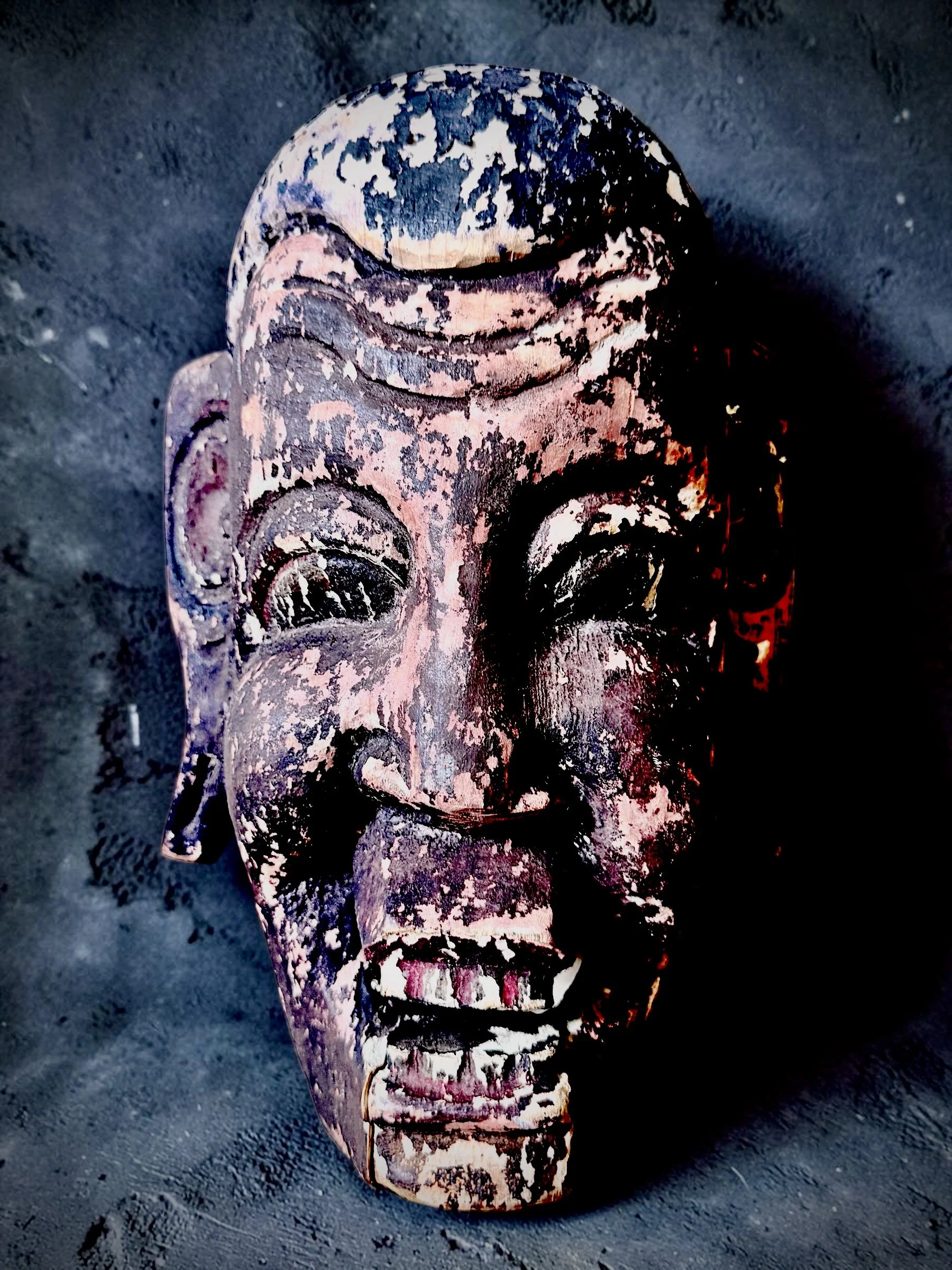
Antique Carved Wood Mask, Helvily Worn Polychrome.
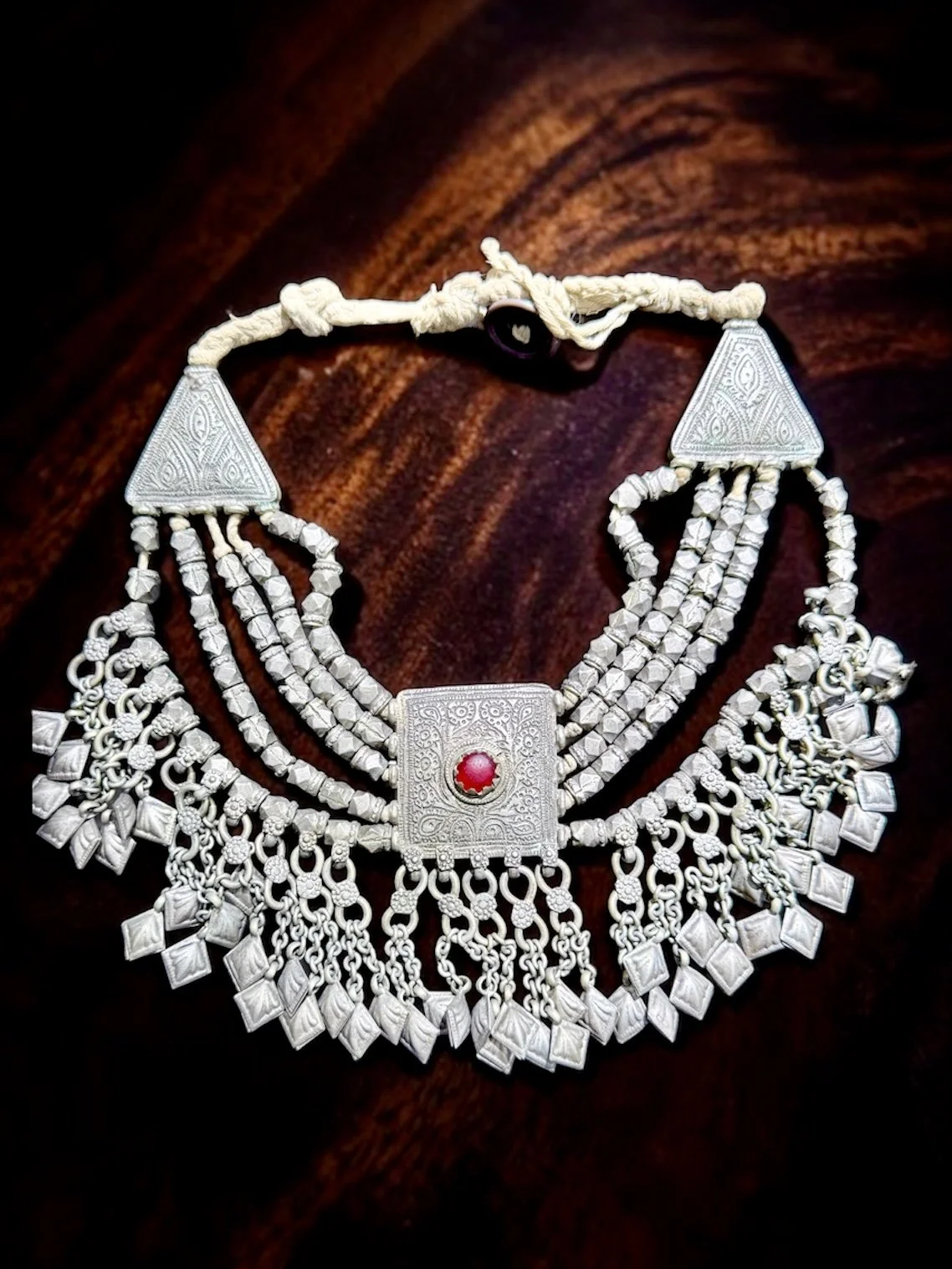
Afghan Kuchi tribal white metal ceremonial necklace, c. early-mid 20th century
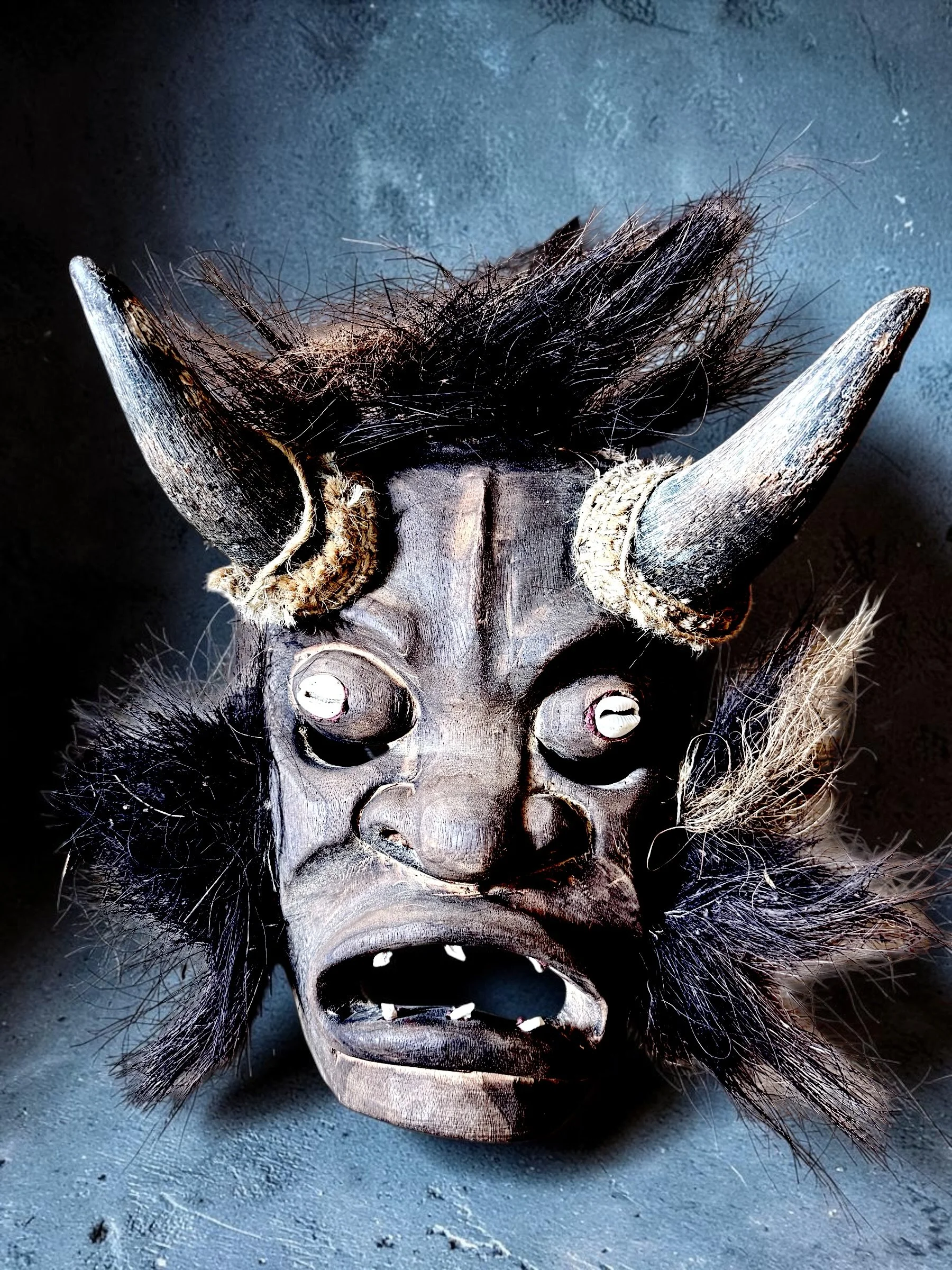
Wood Diablo Mask 2, Natural Horns/hair, Cowrie Shell Eyes, Carved teeth. c. Mid-20th century
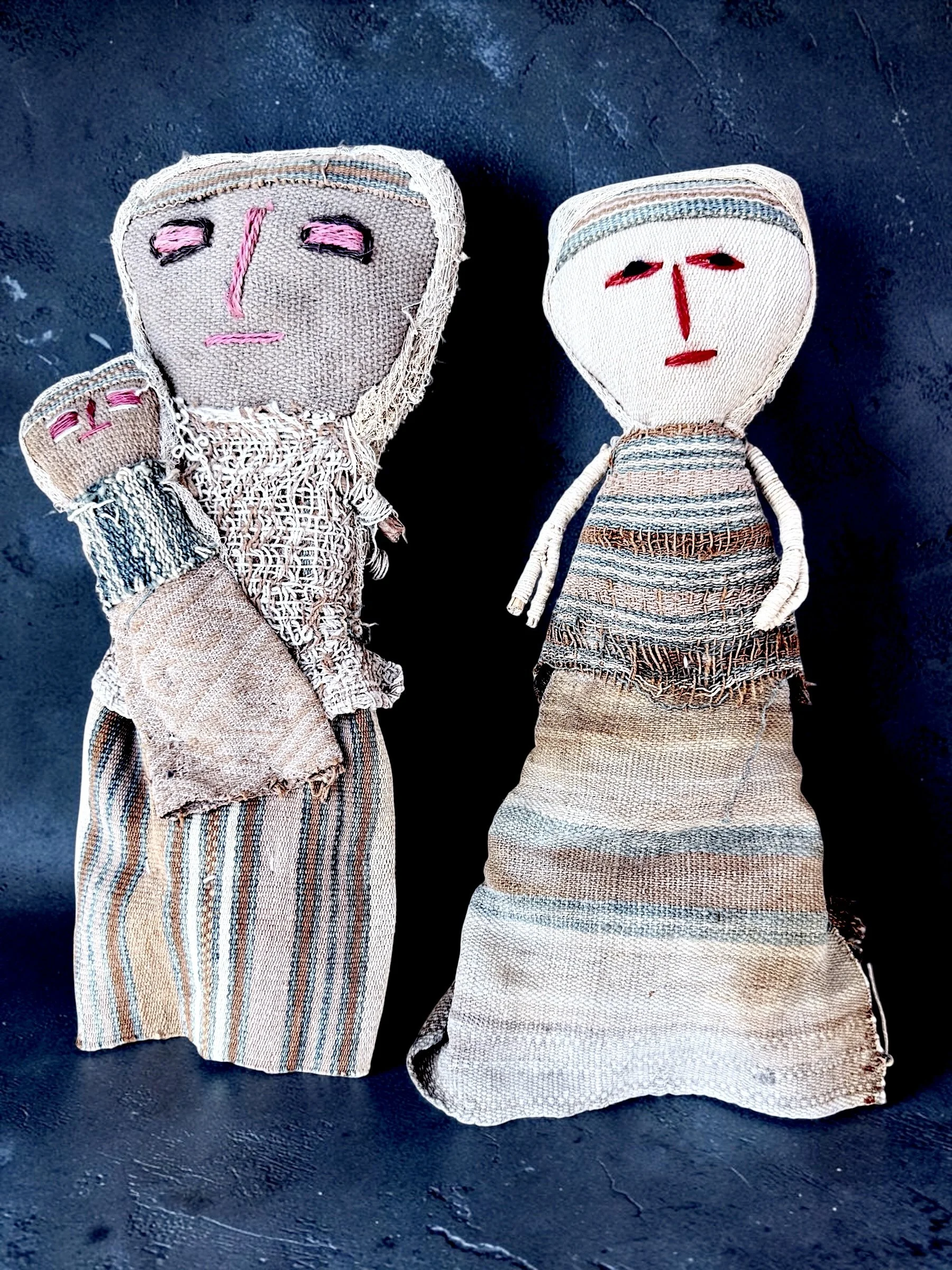
Textile Ritual Folk Art Dolls, Natural Materials. Andean Origin, mid 20th C.
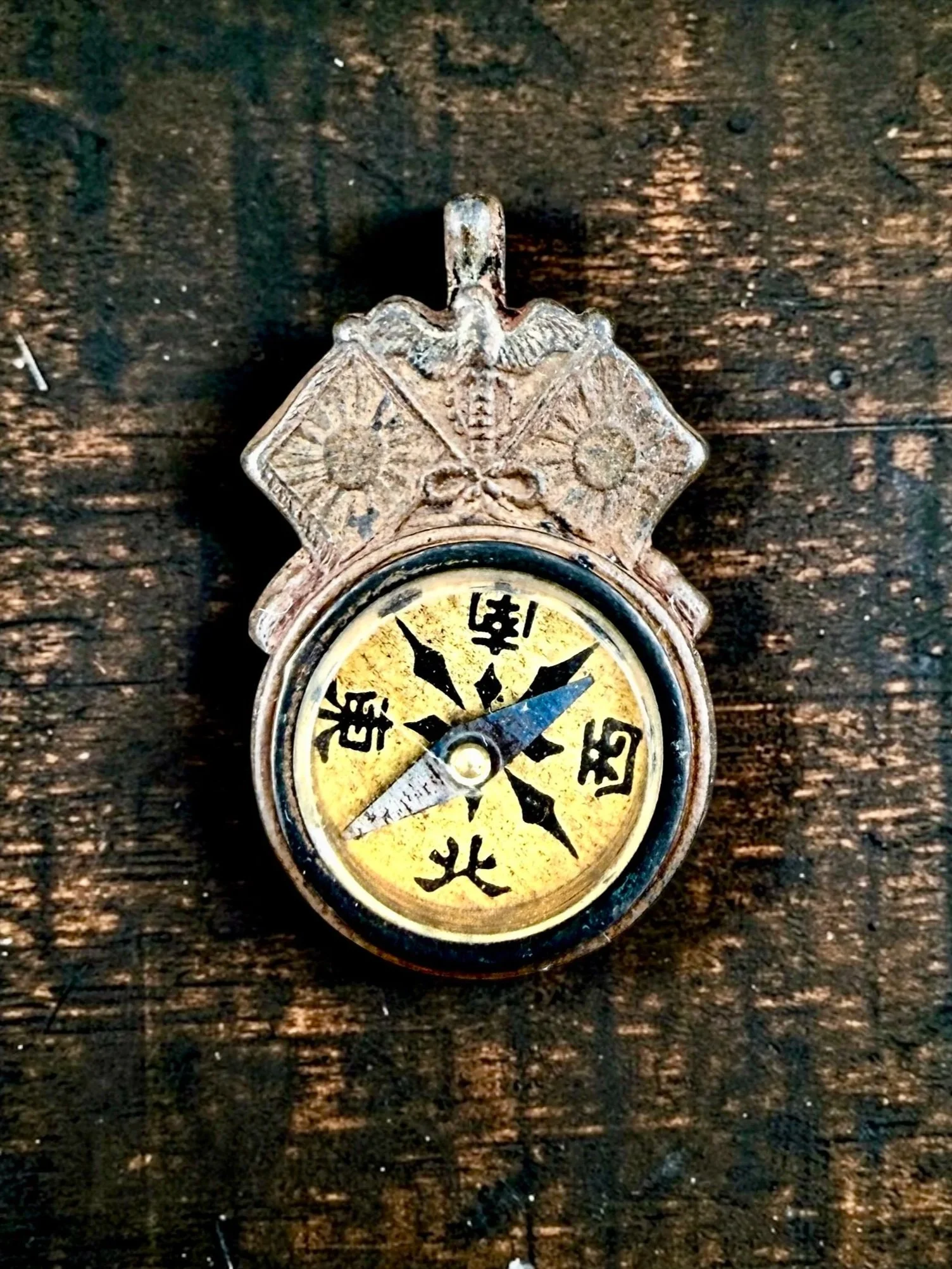
Antique Japanese Military Compass Fob – Meiji Era Russo-Japanese War Eagle Inscription, 1⅛" wide × 1¾" tall
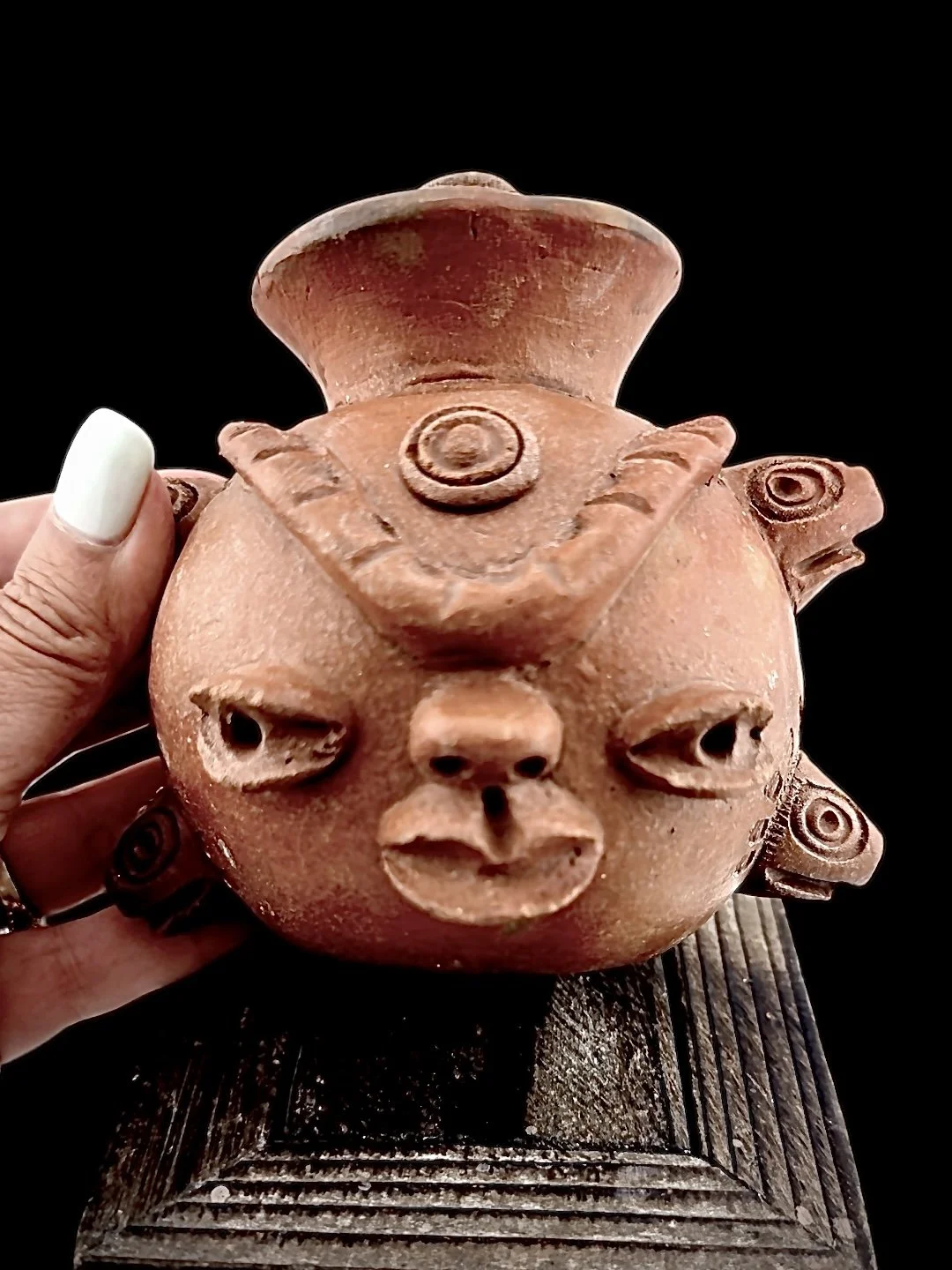
Terracotta Zoomorphic Effigy Vessel with Serpent Motifs, Mexico, c. 1950–1970